


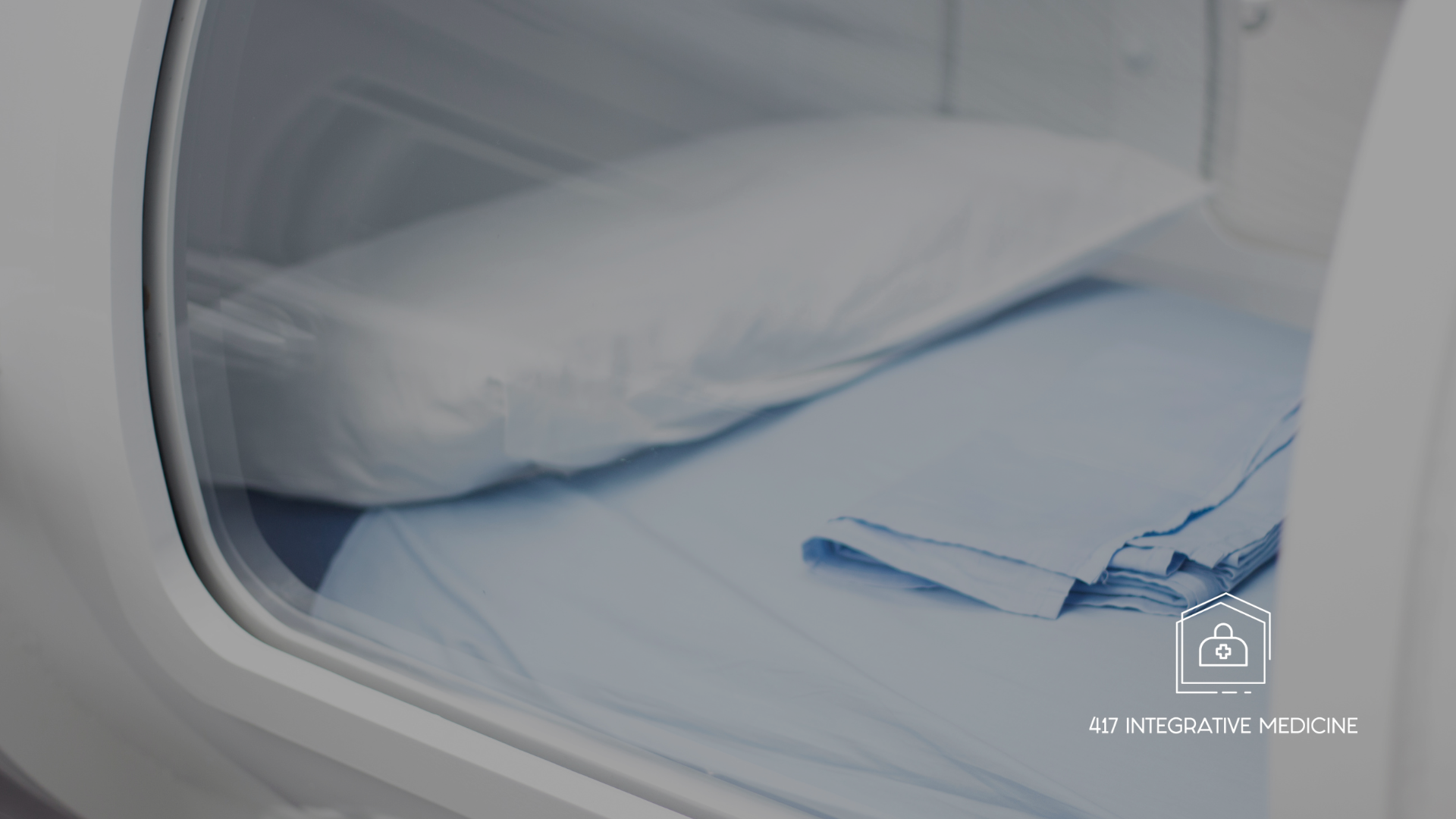
Oxygen is the one thing every healing process in your body depends on. Hyperbaric oxygen therapy takes that ordinary requirement and increases it dramatically, using pressure to push far more oxygen into your tissues than breathing alone can deliver.
Hyperbaric oxygen therapy, usually shortened to HBOT, involves breathing pure oxygen inside a pressurized chamber. The air pressure inside is raised well above normal atmospheric pressure, typically to somewhere between 1.5 and 3 times sea-level pressure.
You sit or lie comfortably in the chamber and simply breathe. The therapy does the work through physics rather than anything you have to do. The field grew out of undersea and diving medicine, which is why decompression sickness remains one of its best-established uses.
Under ordinary conditions, most of the oxygen you breathe rides on hemoglobin inside red blood cells, and those cells are nearly saturated already. Breathing harder does not add much.
Pressure changes that equation:
That last point explains the therapy's role in wound care. Tissue with a compromised blood supply cannot heal, and no amount of ordinary breathing fixes that. Pressurized oxygen reaches it anyway.
If you want the mechanics in more depth, chamber types, pressure levels, and what happens physiologically during a session, our companion piece on what hyperbaric oxygen therapy is and how it works covers that ground.
Those downstream responses are where much of the therapeutic value lies:
This distinction matters, so we will be direct about it. Hyperbaric medicine has a well-defined set of conditions where it is considered standard care, supported by decades of clinical use and research. The Undersea and Hyperbaric Medical Society maintains the recognized indications for hyperbaric oxygen therapy, which include:
For these conditions, HBOT is not an alternative medicine. It is an established treatment with strong supporting evidence.
Beyond that list, HBOT is being studied for a range of conditions, and patients ask about these often:
Here is the honest framing. Research in several of these areas is genuinely encouraging, particularly for traumatic brain injury and fibromyalgia, where controlled trials have shown benefit. Researchers are actively tracking emerging indications for hyperbaric oxygen treatment through multicenter outcome registries, precisely because the data on newer applications is still being assembled. But these applications remain investigational. The studies are smaller, the protocols vary, and the results are promising rather than settled.
Be cautious of any clinic that blurs that line. A trustworthy provider will tell you which category your situation falls into before you spend a dollar.
Screening. A provider reviews your history, medications, lungs, and ears before your first session.
Preparation. You change into approved clothing. No lighters, electronics, or petroleum-based products go into the chamber, since pressurized oxygen is a fire risk.
Compression. The chamber pressurizes gradually. Your ears will feel full, much like descending in an airplane, and staff will teach you how to clear them.
Treatment. You breathe normally for 60 to 120 minutes. Most people read, listen to audio, watch a screen through the chamber, or sleep.
Decompression. Pressure returns to normal slowly.
Afterward. Most patients drive themselves home and resume normal activity. Some feel tired, others feel energized.
It depends heavily on the indication:
Sessions are usually scheduled daily or several times weekly, because the cumulative effect is what drives results.
HBOT has a strong safety record when it is properly screened and supervised. Side effects are usually mild and manageable:
Tell your provider every medication you take. The chemotherapy interactions in particular are serious and easy to overlook.
HBOT tends to be worth a conversation if you are dealing with a chronic wound that will not close, recovering from radiation treatment, managing a diabetic ulcer, or working through a condition where blood supply and tissue oxygen are part of the problem.
It is also reasonable to explore for investigational uses, as long as you go in with clear expectations, a defined number of sessions, and a plan to evaluate whether it is helping. If you want a closer look at how patients use it for recovery and chronic conditions, our overview of the benefits of hyperbaric oxygen therapy walks through those cases in more detail.
At 417 Integrative Medicine in Springfield, MO, HBOT is offered as one part of a comprehensive, root-cause plan rather than a stand-alone product. Our providers screen carefully, explain honestly where the evidence stands for your specific situation, and combine hyperbaric therapy with the rest of your care when it makes clinical sense.
If circulation, inflammation, or slow healing is part of your story, this is a conversation worth having. Learn more about hyperbaric oxygen therapy in Springfield, MO or reach out to our team directly.
Ready to explore whether hyperbaric oxygen therapy can support your recovery? Schedule your consultation at 417 Integrative Medicine and let us review your situation together.


