


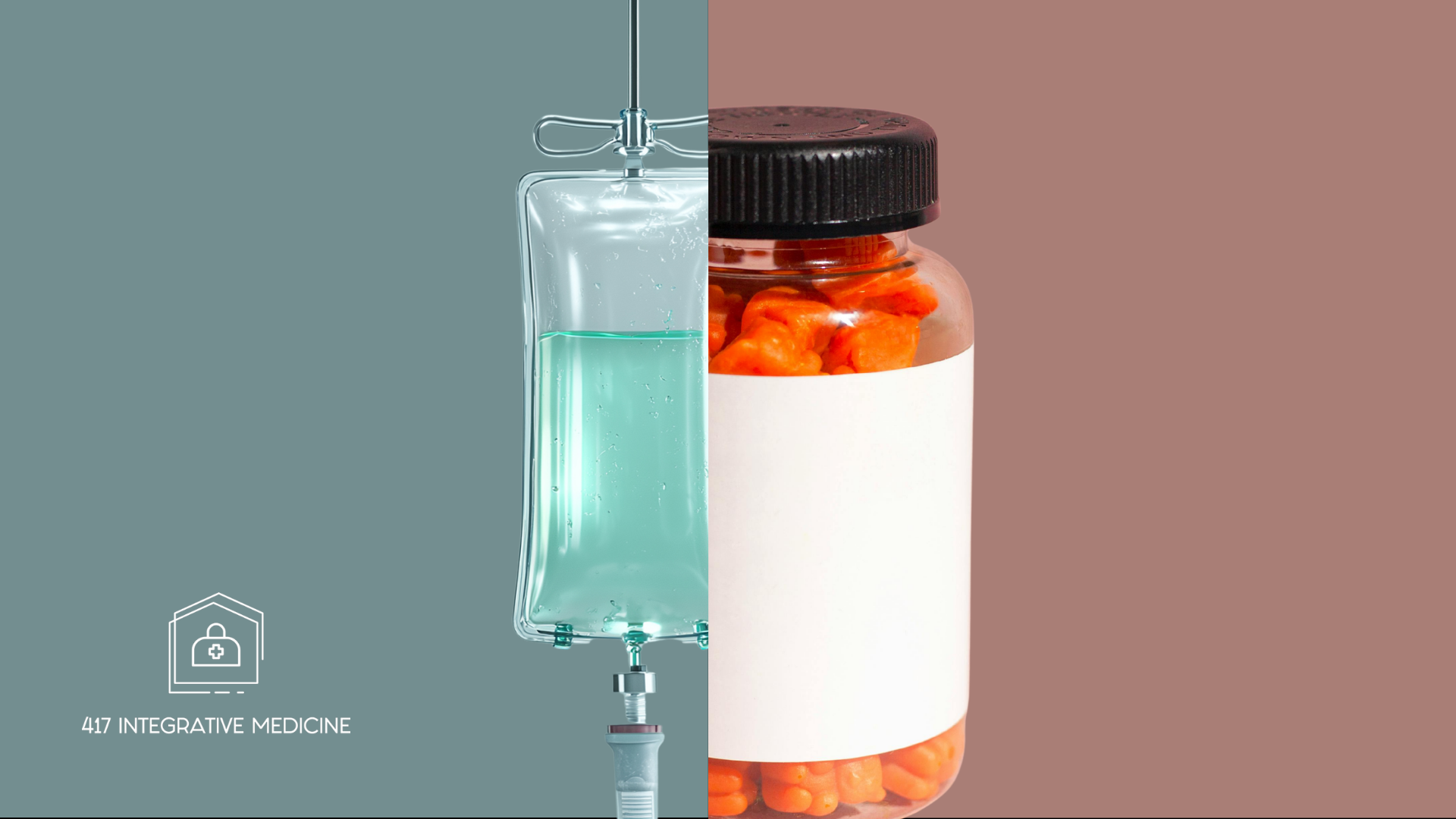
If you have a cabinet full of supplements but still feel tired, foggy, or run down, it is fair to wonder whether any of it is actually getting where it needs to go. Absorption is the part of the supplement conversation almost nobody talks about, and it is often the difference between a nutrient that helps you and a nutrient that simply passes through.
Taking a nutrient and using a nutrient are two very different things. What matters is bioavailability, which is the portion of a dose that actually reaches your bloodstream in a form your cells can use.
A capsule that never fully dissolves, a nutrient blocked by an inflamed gut lining, or a dose broken down by the liver before it circulates can all leave you short, even when the label says you took plenty.
When you swallow a supplement, it takes a long road:
That last step is called first-pass metabolism, and it is why the amount on the label is rarely the amount your cells receive.
For a healthy digestive system, oral supplements work perfectly well for everyday nutritional support. The picture changes when digestion is compromised.
That last point deserves attention. Vitamin C is the clearest example, because the intestinal transporters that carry it become saturated. Past a certain point, taking more by mouth mostly produces loose stools rather than higher blood levels.
IV vitamin therapy delivers nutrients directly into the bloodstream through an intravenous line, which changes the math entirely. There is no stomach acid required, no intestinal lining to cross, and no first-pass metabolism through the liver.
That means:
Magnesium is another good illustration. Oral magnesium often causes cramping or loose stools well before a therapeutic dose is reached, while IV therapy bypasses the gut completely.
Delivering nutrients directly into the bloodstream only helps if the formula is built for you. Common components of an IV vitamin blend include:
The same nutrients exist in capsule form. What differs is how much of each one survives the trip.
Honesty matters here, and IV therapy is not automatically the better option. Oral supplements remain the sensible choice when:
Most people do not need an IV to correct a modest vitamin D level. They need a well-formulated supplement, taken consistently, and a follow-up test to confirm it worked.
IV therapy earns its place when the gut is the bottleneck, or when the goal requires levels that oral supplements may never reach:
In each of these cases, IV therapy is not being used because it is fashionable. It is being used because the vitamins and minerals you need cannot get where they are going by the usual route.
Most appointments follow the same simple rhythm:
Some patients notice a mineral taste or a warm flush during the drip. Both are common and pass quickly.
In a medical setting, with appropriate screening, IV nutrient therapy has a strong safety record. The risks are real but manageable, and they are exactly why supervision matters: vein irritation, bruising, infection at the insertion site, and fluid or electrolyte shifts in patients with certain conditions.
This is precisely why IV vitamins belong in a clinical setting rather than a pop-up lounge.
The most important step comes before either option. Micronutrient testing shows what you are genuinely low in, rather than guessing from symptoms alone.
That distinction protects you twice. It keeps you from paying for nutrients you do not need, and it catches the deficiencies that standard blood work often misses. Once we know the numbers, the delivery method becomes a straightforward clinical decision instead of a marketing question.
A qualified healthcare provider should be the one making that call. IV therapy has become a popular wellness offering, and plenty of places will sell you a drip without ever asking what your labs show. The question is not whether an infusion feels good on the day. It is whether your health and wellness plan actually needs one.
Oral supplements win on both counts. A quality multivitamin costs a few dollars a month and requires nothing but remembering to take it. An IV vitamin infusion takes an hour of your day and costs meaningfully more per session.
That trade-off is worth it when absorption is genuinely broken or when you need a therapeutic dose quickly. It is not worth it as a permanent replacement for a supplement regimen that would work fine if your gut were healthy. In many cases the smartest sequence is to use IV therapy to correct a deficiency, fix the underlying digestive problem, and then maintain your levels orally.
That is usually the cheapest path, and it treats the cause rather than renting a solution indefinitely.
This is the question patients ask most often, and the honest answer has a condition attached. If you are genuinely deficient, IV therapy can produce a noticeable boost within a day or two, because the shortage is corrected immediately rather than over weeks of oral dosing.
If your levels are already adequate, an infusion will mostly boost your hydration status. That can feel good, particularly after illness or a hard training week, but it is not the same as fixing something. Any wellness claim that skips this distinction is overselling.
At 417 Integrative Medicine, we use both tools deliberately. Some patients do beautifully on a well-designed oral protocol. Others have taken supplements faithfully for years with nothing to show for it, and a change in delivery is what finally moves their labs and their symptoms.
Our team builds your wellness plan around your testing, your digestion, and your goals, then re-tests to confirm it is working. IV therapy is one option within that plan rather than the plan itself, and we will tell you plainly when oral supplements are the better fit for what your labs show. That is what separates targeted nutritional support from guesswork.
Ready to find out whether absorption is the missing piece in your health plan? Schedule your consultation at 417 Integrative Medicine in Springfield, MO, and let us look at your numbers together.


