


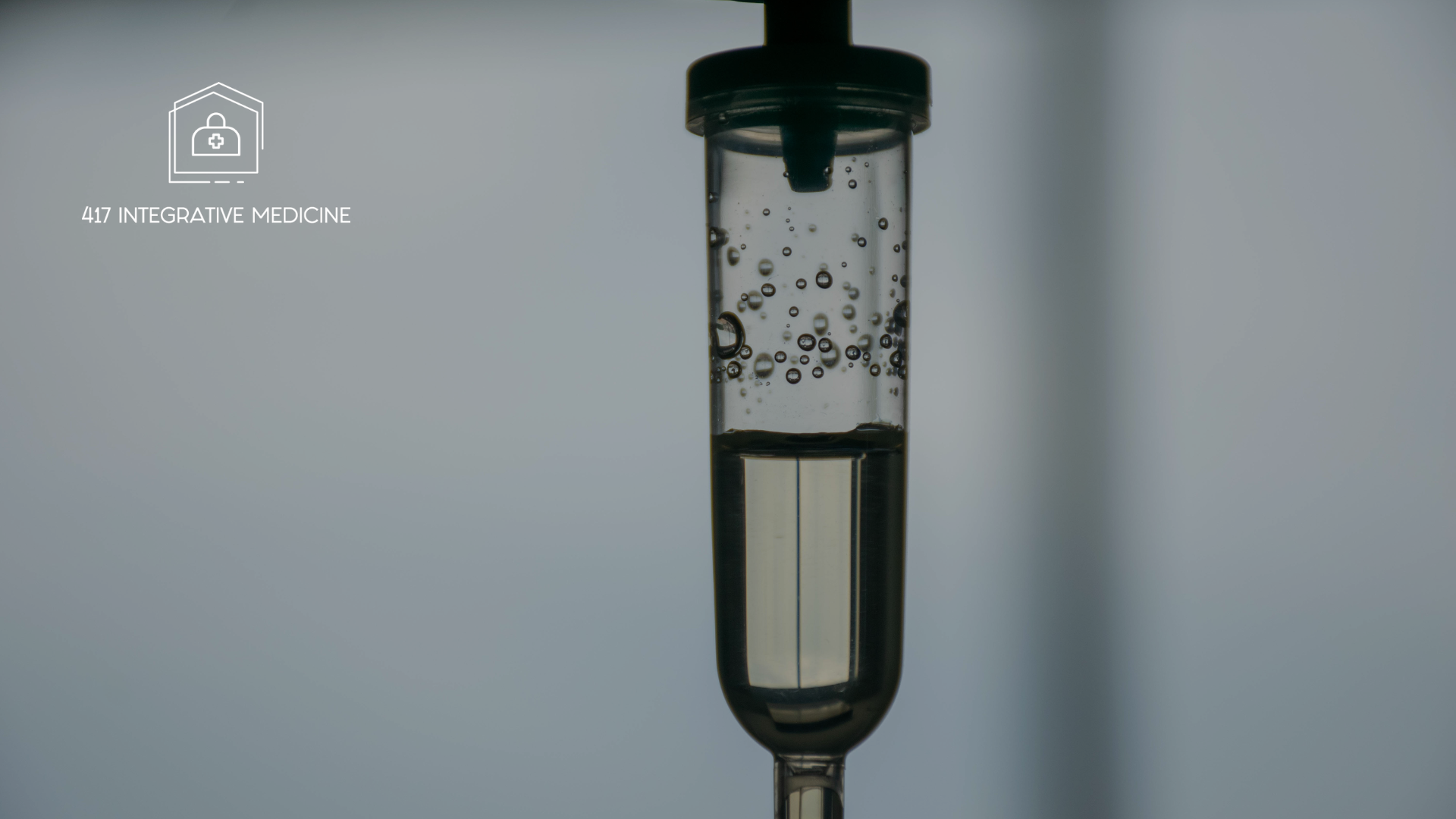
Some kinds of tiredness do not respond to a good night of sleep. When energy, focus, and recovery all decline together, the problem is often less about willpower and more about what is happening inside your cells. NAD+ sits at the center of that conversation.
NAD+, or nicotinamide adenine dinucleotide, is a coenzyme found in every living cell in your body. It is not optional equipment, and life does not proceed without it.
If you are new to the topic and want the full primer, our earlier guide covers the fundamentals in depth: What is NAD Therapy? This article picks up where that one leaves off and focuses on what patients actually come in asking about, which is energy, focus, and cellular repair.
NAD+ has two main jobs:
When NAD+ runs low, both jobs suffer at the same time. That is why the symptoms rarely show up alone.
NAD+ levels decline with age in a well-documented way, and several everyday factors accelerate the slide:
The pattern is a squeeze from both directions. Production slows while demand rises.
There is no single symptom that proves low NAD+, but patients often describe a familiar cluster:
Oral NAD+ faces a real obstacle. The intact molecule is poorly absorbed and largely broken down in digestion, which is why most oral products use precursors such as NR or NMN and rely on the body to convert them.
An intravenous route works differently:
Patients often ask how this compares to a subcutaneous injection or an oral capsule. An injection is quicker and more convenient, but it delivers a smaller dose, and capsules depend on digestion and conversion. IV therapies remain the most direct option when the goal is a meaningful rise in circulating NAD+.
Your mitochondria produce cellular energy, and they cannot do it without NAD+ carrying electrons through the process.
When NAD+ is scarce, mitochondrial output falls. Patients often describe that as fatigue, but it is more accurately a supply problem: the machinery is intact, and the cofactor that runs it is in short supply. Supporting NAD+ availability aims at that specific bottleneck rather than masking tiredness with stimulants.
The brain is one of the most energy-hungry organs you have, which makes it especially sensitive to shortfalls in cellular energy.
Patients pursuing NAD+ therapy for cognitive function commonly report sharper focus, steadier concentration through the afternoon, and less of the mental static that makes complex tasks feel heavy. Research in this area is still developing, and individual response varies widely.
This is also where the anti-aging conversation around NAD+ tends to start. The claim worth making is a modest one: supporting a coenzyme that declines with age is a reasonable target, not a reversal of aging itself.
This is where NAD+ becomes interesting beyond energy. Sirtuins and PARP enzymes both consume NAD+ to do their work, and both are central to DNA repair and cellular housekeeping.
When NAD+ is limited, repair processes compete for a shrinking resource. Supporting levels are intended to give those maintenance systems room to operate, which is why NAD+ features so prominently in conversations about healthy aging.
Patients deserve a straight answer here. NAD+ biology is genuinely well established, and the decline of NAD+ with age is documented in the scientific literature.
Clinical research on NAD+ IV therapy specifically is younger. Much of the current evidence comes from small studies, early trials, and clinical observation rather than large controlled trials. Promising is the accurate word. Proven, for most of the uses patients ask about, is not yet.
We would rather tell you that plainly and let you make an informed decision.
NAD+ infusions differ from a standard vitamin drip in one important way: they run slowly, and rushing them causes discomfort.
Common sensations during the drip include chest tightness, flushing, mild nausea, abdominal cramping, or a feeling of pressure. These are well recognized, they are tied directly to infusion speed, and they typically ease within moments when the rate is slowed. Tell your nurse rather than waiting it out.
Most patients feel normal shortly after the session ends. Some notice a boost the same day, while others describe a gradual shift across a series of infusions.
Come well hydrated and having eaten beforehand. Good hydration makes the vein easier to access and the infusion more comfortable from the start.
NAD+ therapy is most often explored by patients dealing with:
For a broader look at how NAD therapy is administered and the questions patients ask most often, see our complete guide to NAD therapy.
Fatigue and brain fog have many possible causes, and several of them are common, treatable, and easy to confirm with a blood draw.
Thyroid dysfunction, anemia, B12 deficiency, sleep apnea, depression, and blood sugar problems all produce the same complaints patients bring to NAD+ consultations. A responsible provider rules those out first. If something simpler explains your symptoms, treating it will serve you better than any infusion.
At 417 Integrative Medicine, NAD+ therapy is one option within a broader wellness plan, never a stand-alone answer. Our physicians and nurse practitioners start with testing, look at your mitochondrial and metabolic picture, and use NAD+ where it fits the findings. Infusions are prepared through a licensed compounding pharmacy and administered on site with staff present throughout.
We take the infusion itself seriously, running it at a comfortable pace with staff present throughout, and we adjust based on how you actually respond rather than a fixed protocol.
Ready to explore whether NAD+ IV therapy fits your energy and focus goals? Schedule your consultation at 417 Integrative Medicine in Springfield, MO.


